🔗 Linked Evidence
The_Pang_Formula — p.10
📄 The Pang Formula | p.10
📄 The Pang Formula | p.10
📝 Extracted Text (OCR)
The bold text block in the draft notes reads: "Data collected in various work environments
with similar noise sources indicate exposures below hazardous levels. WorkSafeBC has
noise data from a BC Ferry data center in 1991 and from the central computer processing
area of a large hospital in 1992 indicating exposure levels of 79 and 72 dBA, respectively.”

The dates "1991" and "1992" are explicitly present in the Advisor's draft working notes. She
knew the data was from 1991 and 1992. She wrote the years into her working document.
She had full cognitive awareness that she was comparing a 2026 classroom to 35-year-old
benchmarks from a marine vessel and a hospital printer.

The Sanitized Final Report — The Act of Concealment

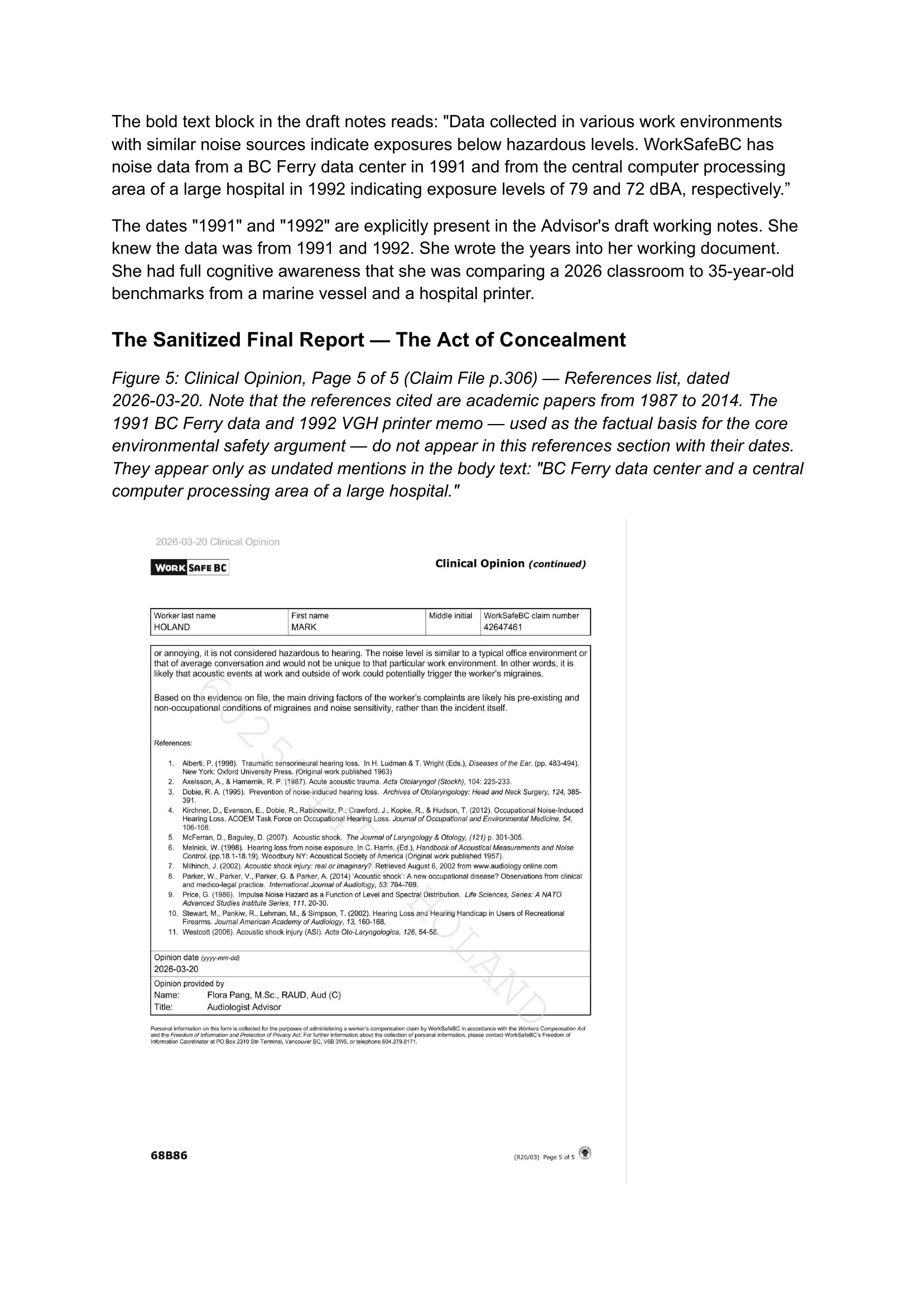
Figure 5: Clinical Opinion, Page 5 of 5 (Claim File p.306) — References list, dated
2026-03-20. Note that the references cited are academic papers from 1987 to 2014. The
1991 BC Ferry data and 1992 VGH printer memo — used as the factual basis for the core
environmental safety argument — do not appear in this references section with their dates.
They appear only as undated mentions in the body text: "BC Ferry data center and a central
computer processing area of a large hospital."

| work Bate BC Clinical Opinion (continued)

Worker last name First name Middle initial | WorkSafeBC claim number
HOLAND MARK 42647461

or annoying, it is not considered hazardous to hearing. The noise level is similar to a typical office environment or
that of average conversation and would not be unique to that particular work environment. In other words, it is
likely that acoustic events at work and outside of work could potentially trigger the worker's migraines.

Based on the evidence on file, the main driving factors of the worker's complaints are likely his pre-existing and
non-occupational conditions of migraines and noise sensitivity, rather than the incident itself.

References:

1. Alberti, P. (1998), Traumatic sensorineural hearing loss. In H. Ludman & T. Wright (Eds.), Diseases of the Ear. (pp. 483-494),
New York: Oxford University Press. (Original work published 1963)

2. Axelsson, A., & Hamernik, R. P. (1987). Acute acoustic trauma, Acta Otolaryngol (Stockh), 104: 225-233.

3. Dobie, R. A. (1995). Prevention of noise-induced hearing loss. Archives of Otolaryngology: Head and Neck Surgery, 124, 385-
301

4, Kirchner, D., Evenson, E., Dobie, R., Rabinowitz, P., Crawford, J. Kopke, R., & Hudson, T. (2012). Occupational Noise-Induced
Hearing Loss. ACOEM Task Force on Occupational Hearing Loss. Journal of Occupational and Environmental Medicine, 54,
106-108

5. McFerran, D., Baguley, D. (2007). Acoustic shock. The Journal of Laryngology & Otology, (121) p. 301-305

6. Melnick, W. (1998). Hearing loss from noise exposure. In C. Harris, (Ed.), Handbook of Acoustical Measurements and Noise
Control. (pp.18.1~18.19). Woodbury NY: Acoustical Society of America (Original work published 1957).

7. Milhinch, J. (2002). Acoustic shock injury: real or imaginary? Retrieved August 6, 2002 from www.audiology online.com

8. Parker, W., Parker, V., Parker, G. & Parker, A. (2014) ‘Acoustic shock’: A new occupational disease? Observations from clinical
and medico-legal practice. International Journal of Audiology, 53: 764-769.

9. Price, G. (1986). Impulse Noise Hazard as a Function of Level and Spectral Distribution. Life Sciences, Series: A NATO
Advanced Studies Institute Series, 111, 20-30.

10. Stewart, M., Pankiw, R., Lehman, M., & Simpson, T. (2002). Hearing Loss and Hearing Handicap in Users of Recreational
Firearms. Journal American Academy of Audiology, 13, 160-168.

Westcott (2008). Acoustic shock injury (ASI). Acta Oto-Laryngologica, 126, 54-58.

Opinion date (yyyy-mm-da)

2026-03-20

Opinion provided by

Name: Flora Pang, M.Sc., RAUD, Aud (C)
Title: Audiologist Advisor

Perzonal information on this form is collected forthe purposes of administering a worke's compensation claim by WorkSafeBC in accordance withthe Workers Compensation Act
‘and the Freedom of Information and Protection of Privacy Act. For fuer information about the callection of personal iniormaton, please contact WorkSafeBC Freedom of
information Coordinator at PO Box 2310 Stn Terminal, Vancouver BC, VBE 3WV5, or telephone 604.279.8171

68B86 (720/03) Page s ors ®)