🔗 Linked Evidence
The_Pang_Formula — p.4
📄 The Pang Formula | p.4
📄 The Pang Formula | p.4
📝 Extracted Text (OCR)
SECTION II: THE HOLAND CASE STUDY — OMC1
CLASSROOM

When the Pang Formula was directed at the Holand file, the systemic habit of choosing
convenient textbook models over physical telemetry escalated from analytical error into a
deliberate containment exercise, characterized by the active omission of quantified clinical
evidence and the forensic scrubbing of a data timeline.

The Physical Reality: A Classroom — Not a Data Centre

Between January 12 and January 23, 2026, the patient — a 25-year heavy industry veteran,
including 19 years at CN Rail and BCRTC — was stationed inside the OMC1 Training Room
at Workstation 3. This was a pedagogical environment: a classroom designed for human
learning and training.

Into this classroom, the employer had placed two refrigerator-sized industrial server racks
less than two feet directly behind the worker's head. Furthermore, a rigid hardware acoustic
side panel was missing from the active enclosure. Rather than a diffused, ambient
background hum, this structural gap allowed high-velocity, continuous high-frequency
cooling fan arrays to project an unshielded acoustic beam directly into the occupied
workspace.

The worker's on-site acoustic telemetry — captured using a calibrated USB condenser
microphone with Audacity, verified against 440 Hz and 1000 Hz reference tones — identified
a dominant mechanical resonance spike at 328 Hz. Due to the room’s geometry, this energy
reflected off a parallel glass window, focusing a directed acoustic beam into the worker's left
ear canal. The differential acoustic load between ears was measurable and quantifiable.

This is not a data centre. A data centre is a restricted, access-controlled machine
environment where personnel wear PPE for maintenance. The OMC1 Training Room was an
occupied classroom where unprotected students sat within arm's reach of exposed industrial
hardware with a missing containment panel. This spatial and contextual distinction is
fundamental to any valid assessment.

The Clinical Opinion: March 20, 2026

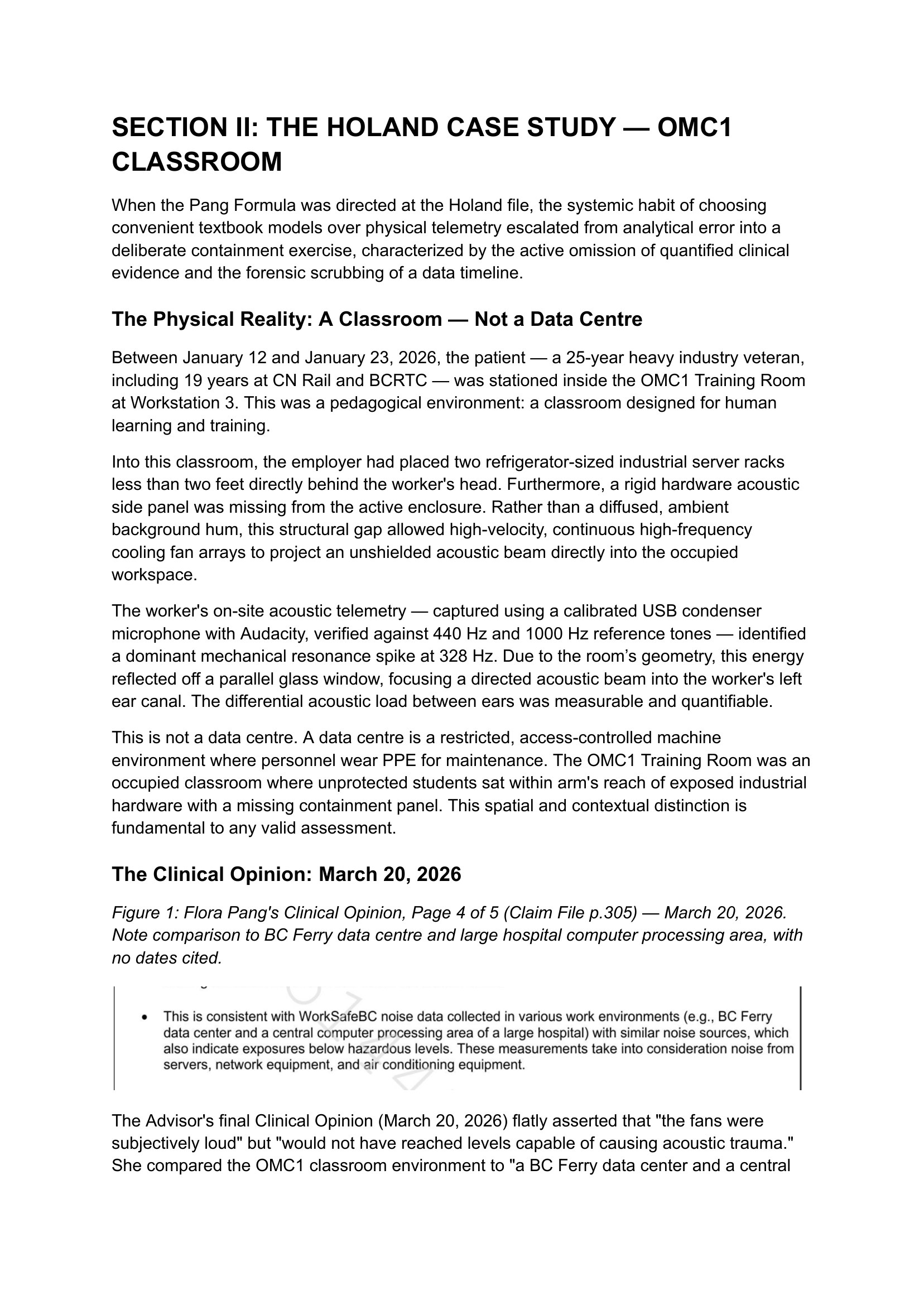
Figure 1: Flora Pang's Clinical Opinion, Page 4 of 5 (Claim File p.305) — March 20, 2026.
Note comparison to BC Ferry data centre and large hospital computer processing area, with
no dates cited.

e This is consistent with WorkSafeBC noise data collected in various work environments (e.g., BC Ferry
data center and a central computer processing area of a large hospital) with similar noise sources, which
also indicate exposures below hazardous levels. These measurements take into consideration noise from
servers, network equipment, and air conditioning equipment.

The Advisor's final Clinical Opinion (March 20, 2026) flatly asserted that "the fans were
subjectively loud" but "would not have reached levels capable of causing acoustic trauma."
She compared the OMC1 classroom environment to "a BC Ferry data center and a central