HOLAND_CLAIM_FILE_p360
📄 HOLAND_CLAIM_FILE | p.360
📄 HOLAND_CLAIM_FILE | p.360
📝 Extracted Text (OCR)
Amanda Sullivan MCP, RCC
604 Columbia St.
New Westminster, BC V3M 1A5
(778) 875-9495
asullivantherapy@gmail.com

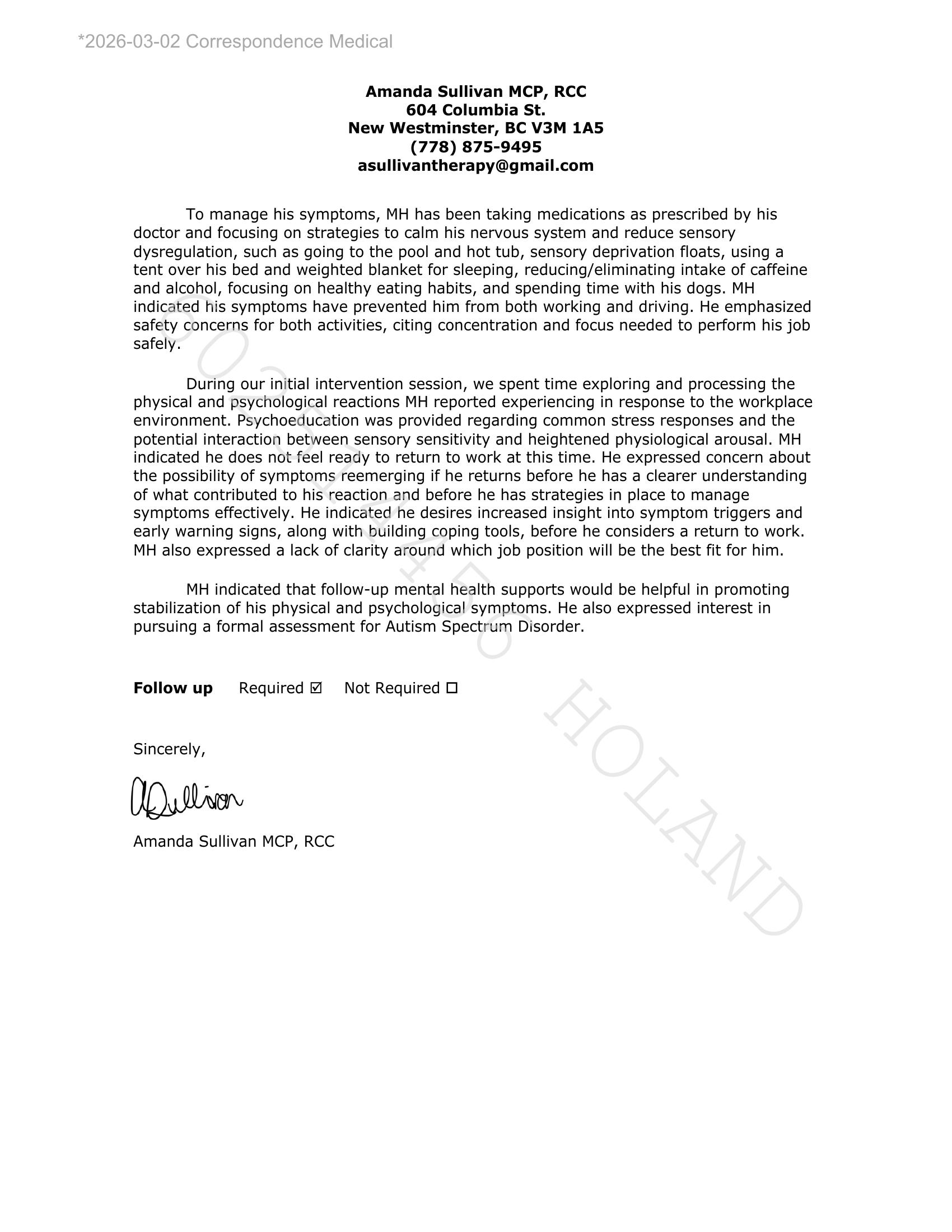
To manage his symptoms, MH has been taking medications as prescribed by his
doctor and focusing on strategies to calm his nervous system and reduce sensory
dysregulation, such as going to the pool and hot tub, sensory deprivation floats, using a
tent over his bed and weighted blanket for sleeping, reducing/eliminating intake of caffeine
and alcohol, focusing on healthy eating habits, and spending time with his dogs. MH
indicated his symptoms have prevented him from both working and driving. He emphasized
safety concerns for both activities, citing concentration and focus needed to perform his job
safely.

During our initial intervention session, we spent time exploring and processing the
physical and psychological reactions MH reported experiencing in response to the workplace
environment. Psychoeducation was provided regarding common stress responses and the
potential interaction between sensory sensitivity and heightened physiological arousal. MH
indicated he does not feel ready to return to work at this time. He expressed concern about
the possibility of symptoms reemerging if he returns before he has a clearer understanding
of what contributed to his reaction and before he has strategies in place to manage
symptoms effectively. He indicated he desires increased insight into symptom triggers and
early warning signs, along with building coping tools, before he considers a return to work.
MH also expressed a lack of clarity around which job position will be the best fit for him.

MH indicated that follow-up mental health supports would be helpful in promoting
stabilization of his physical and psychological symptoms. He also expressed interest in
pursuing a formal assessment for Autism Spectrum Disorder.

Followup Required Not Required O
Sincerely,

Amanda Sullivan MCP, RCC